
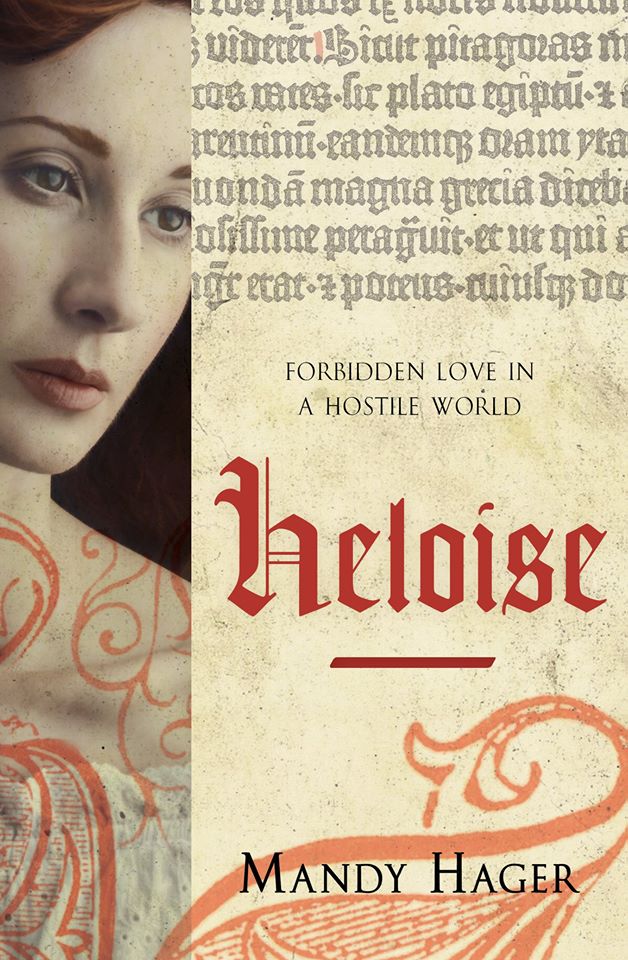
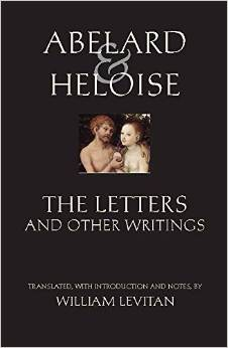
I’m thrilled to announce that my new novel Heloise will be launched on Monday 15th May at 6pm Unity Books, Wellington. It’s had a long gestation, first making its presence felt in 2009! Here’s the blurb:
What happens when the 12th century’s most famous French lovers are caught in the crossfire of factions, religious reform and blind ambition? Heloise is a determined young woman with an exceptional mind, longing to pursue learning rather than marriage or life as a cloistered nun. Her path inevitably crosses with Peter Abelard, the celebrity philosopher, theologian and master at Paris’ famed Cathedral School. When two such brilliant minds meet and engage, sparks are likely to ignite. But theirs is an impossible love. This is a time when the Gregorian Reforms are starting to bite and celibacy among the clergy and church officials is being rigorously imposed. Based on meticulous up-to-date research and the pair’s own writings, this novel offers a plausible interpretation of the known facts and a vivid imagining of the gaps in this legendary story. It shines a light on a changing world whose attitudes and politics are not so very different from our own.
For some answers to frequently asked questions look here
So how did a NZ writer come to write such a book? Here’s a little insight from a lecture I gave last year.
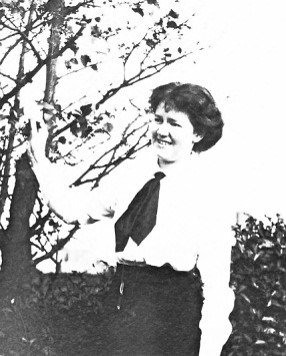 |
| Helen Waddell |
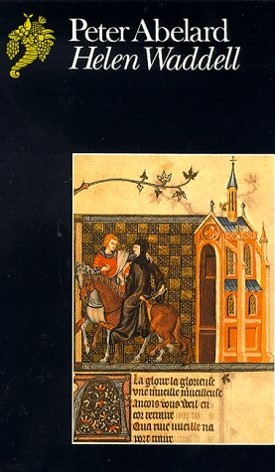 Among Waddell’s many achievements was the authorship of a highly regarded novel based on Abélard’s life, ‘Peter Abélard’ (first published in 1933 by Constable and Co., London.) My friend invited me to visit her in County Down, Northern Ireland, and to look through the many letters and papers in Helen Waddell’s collection, to see if there was anything that took my interest to write about.
‘I passed, fully awake and not I think delirious, into some strange state of being. For suddenly I was Héloïse, not as I had ever imagined her, but an old woman, abbess of the Paraclete, with Abélard twenty years dead; and I was sitting in a great chair lecturing to my nuns on his Introductio ad theologiam. It was near the end of the lecture, and I pronounced the benediction, and sat watching them go out, two by two. And one of them, the youngest and prettiest of my nuns for whom I felt some indulgence, glanced at me sideways as she went out, and I heard her whisper to the older sister beside her ‘Elle parle toujours Abélard.
It stabbed me. And even when the first hurt of it was past, the realisation that what was once a glory in men’s minds had become an old woman’s wearisome iteration. I began wondering if it were indeed true: if after all these years I was lecturing on his theology for the sake of now and then naming his name. And from that I began to remember that his theology has been condemned as heresy; and – for by this time Abélard had done his work upon me and brought me to some sense of God – I began to wonder if I had periled the souls in my charge by teaching them heretical doctrine for the sake of gratifying an ancient lust. But I remembered that Peter the Venerable had absolved him on his deathbed … I rose and went to the ark where the charters of the convent were kept, and took from it the parchment of the absolution: and I sat there hour after hour, fingering the rough edges of the great seal of Cluny in my hands, and finding some dim comfort in it. Then the morning came, and with no sense of transition I was myself, but with full awareness of the other who I had been the night before: and when the Mother Superior came to see me during the morning, I laughed and said ‘Ma Mere, I too was an Abbess all last night.’
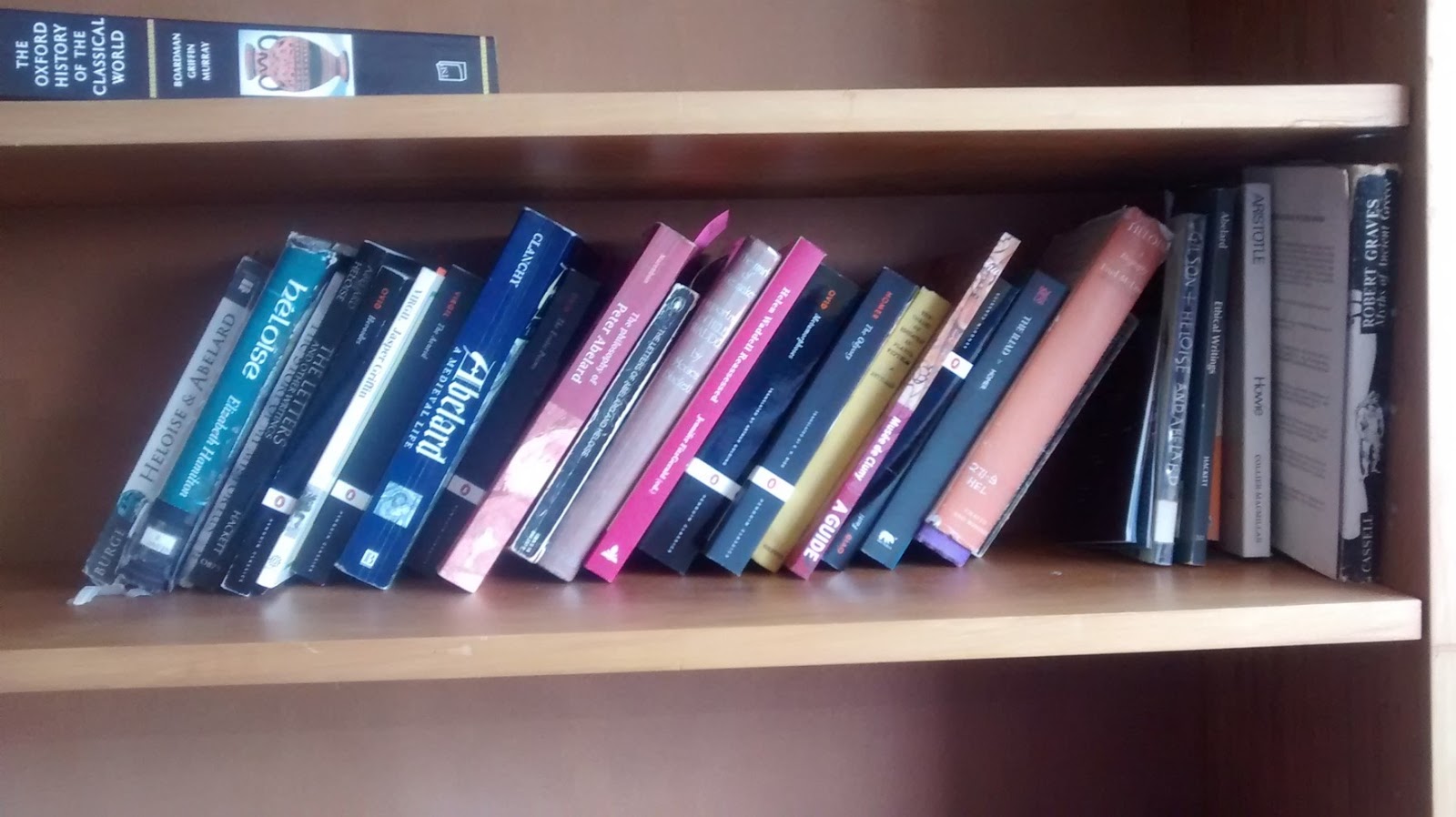
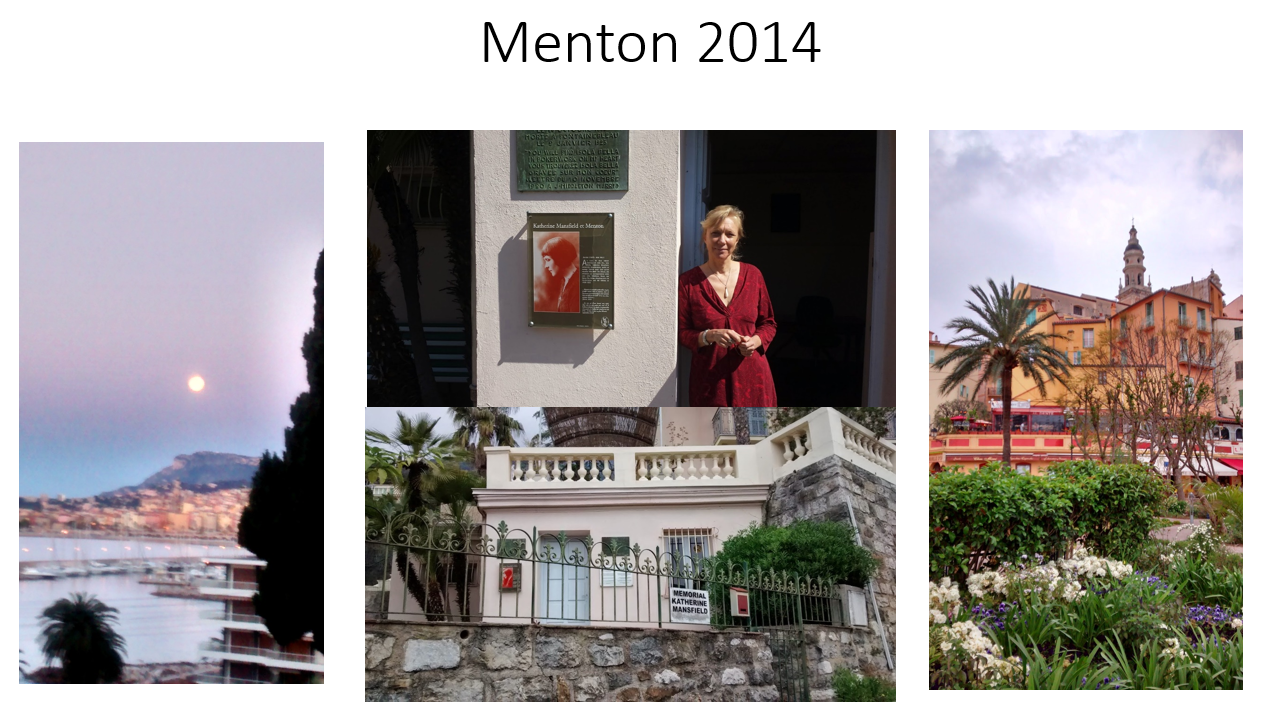
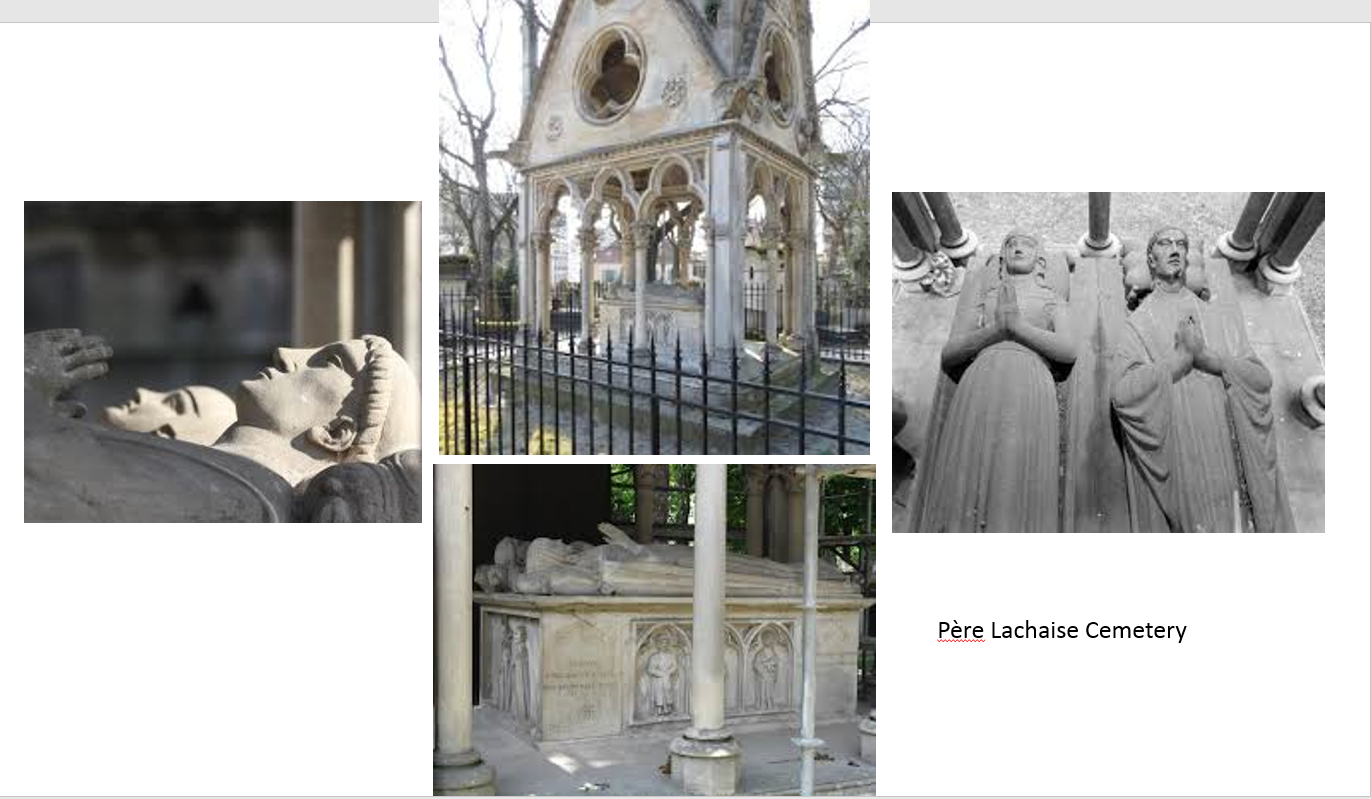
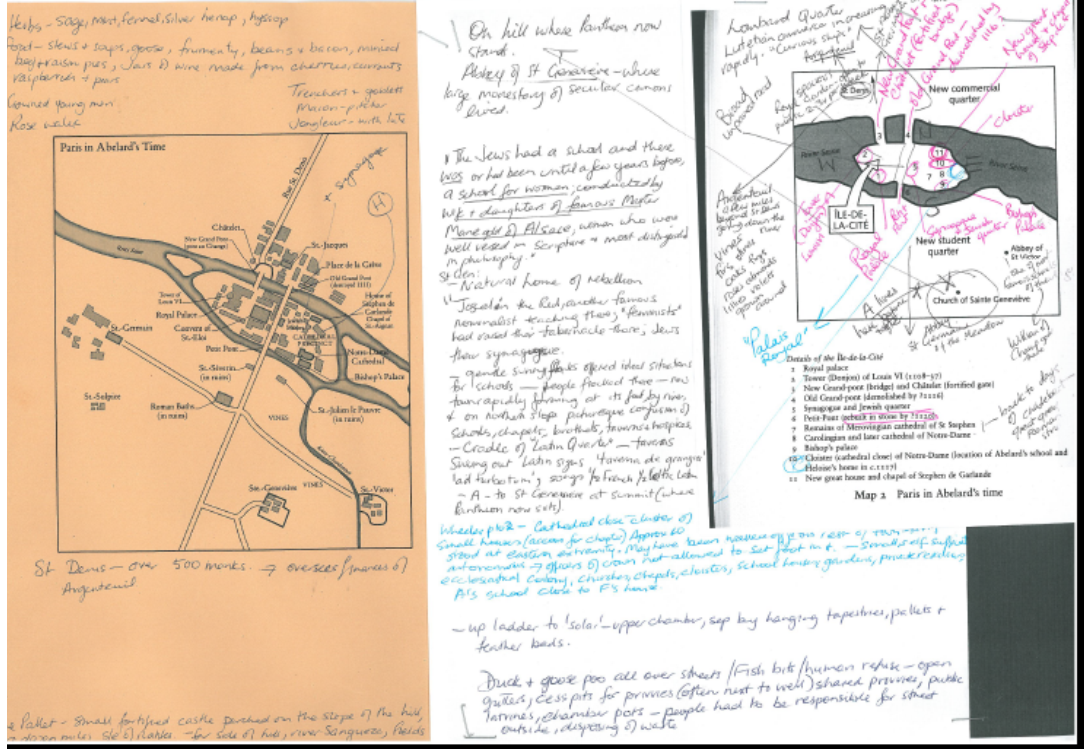 With fifteen kilos of books in tow, my husband and I left for France in April of 2014, and I spent my time in Menton diving down into all the available material in English, and in travelling to the story’s significant sites throughout France.
 By the end of my time in Menton I had identified several gaps that still needed to be filled, including the literature and writings Héloïse was familiar with (and frequently referenced in her letters), including St Jerome, Boethius, St Augustine, Abbott Suger, Baudri, Helen Waddell’s wandering scholar poets, Ovid, Homer, Vigil, Aristotle, Apollonius, Aristophanies, Aeschylus, Cicero, Seneca, Euripides, Lucius, Hrotsvit of Gandersheim, Terence of Rome, Plato, and St Bernard.
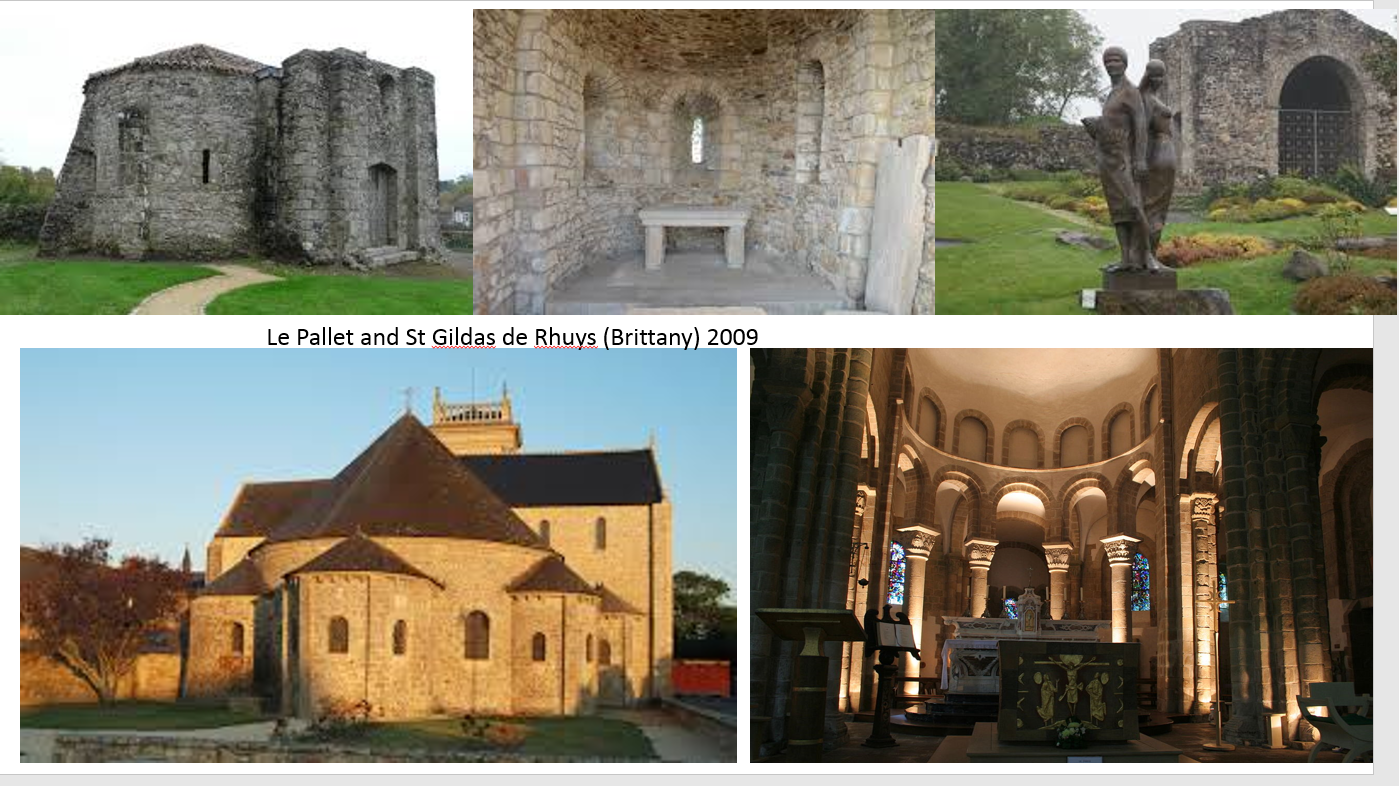
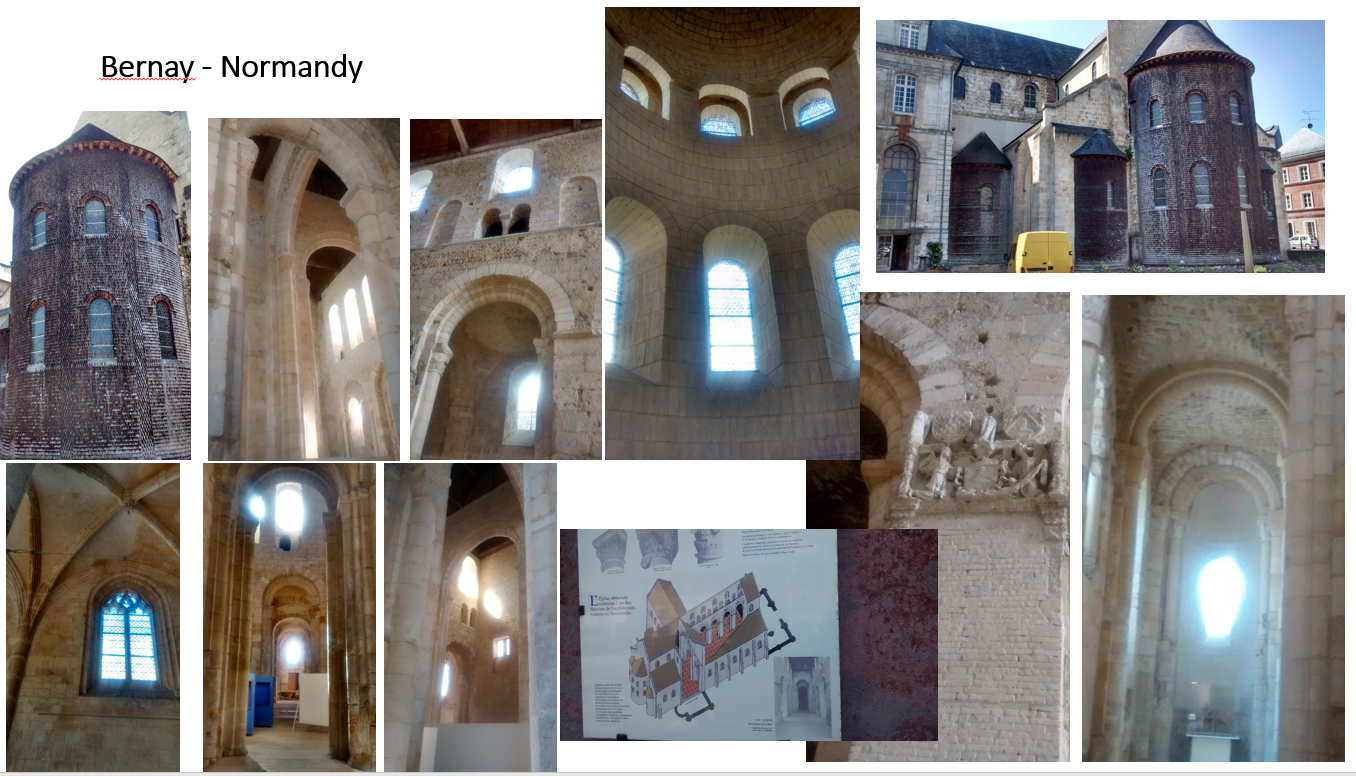 We started in Brittany, where Abélard was born, and where Héloïse gave birth to her son Astralabe, then up to Normandy to explore some very authentic 12th century churches, including one in Bernay that had been stripped right out so we could see the bones of it, and the way the light fell through the windows to create awe in the very make-up of the architecture. We then travelled down past Chartres to the top of the Loire valley where the Paraclete had stood (the abbey where Héloïse spent forty-odd years of her life).
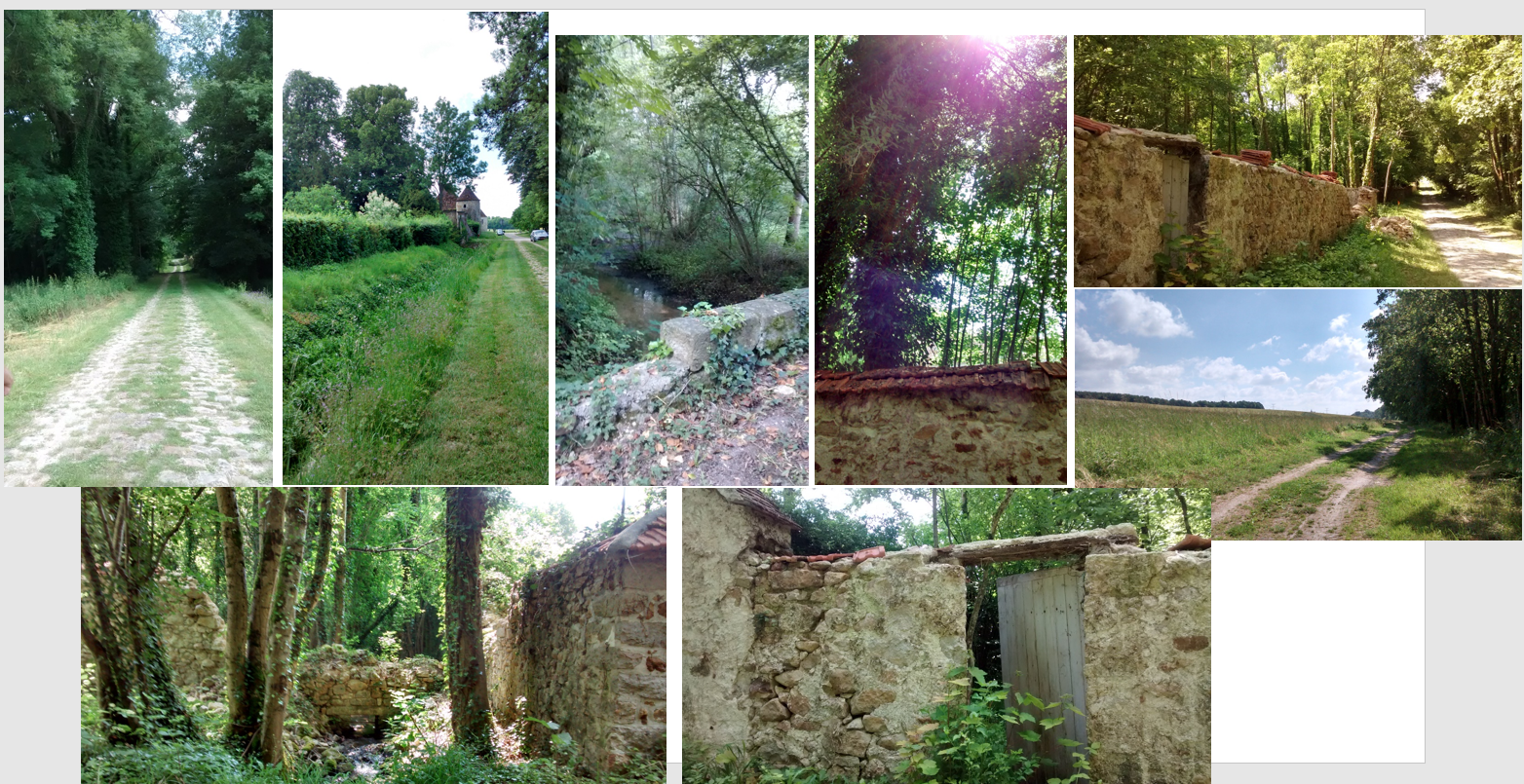 |
| Site of the Paraclete |
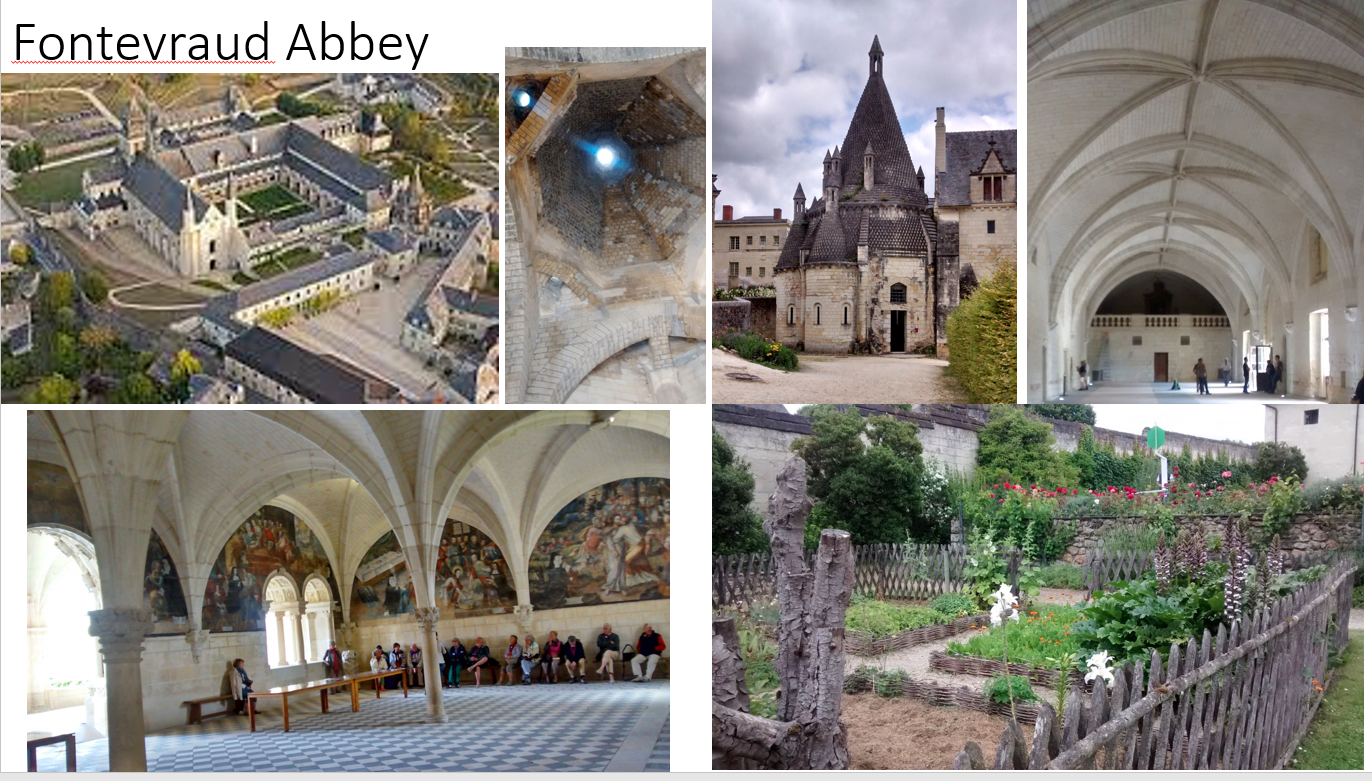
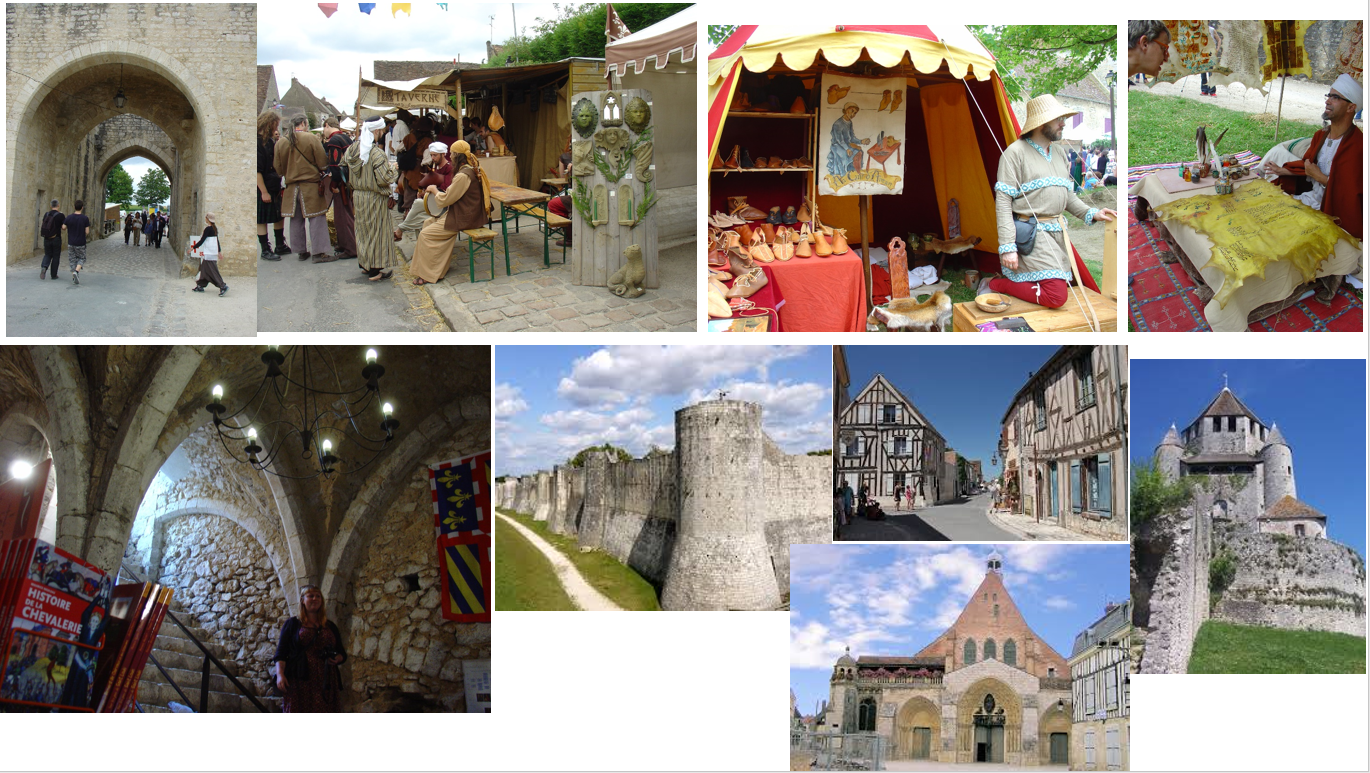 |
| Provins |
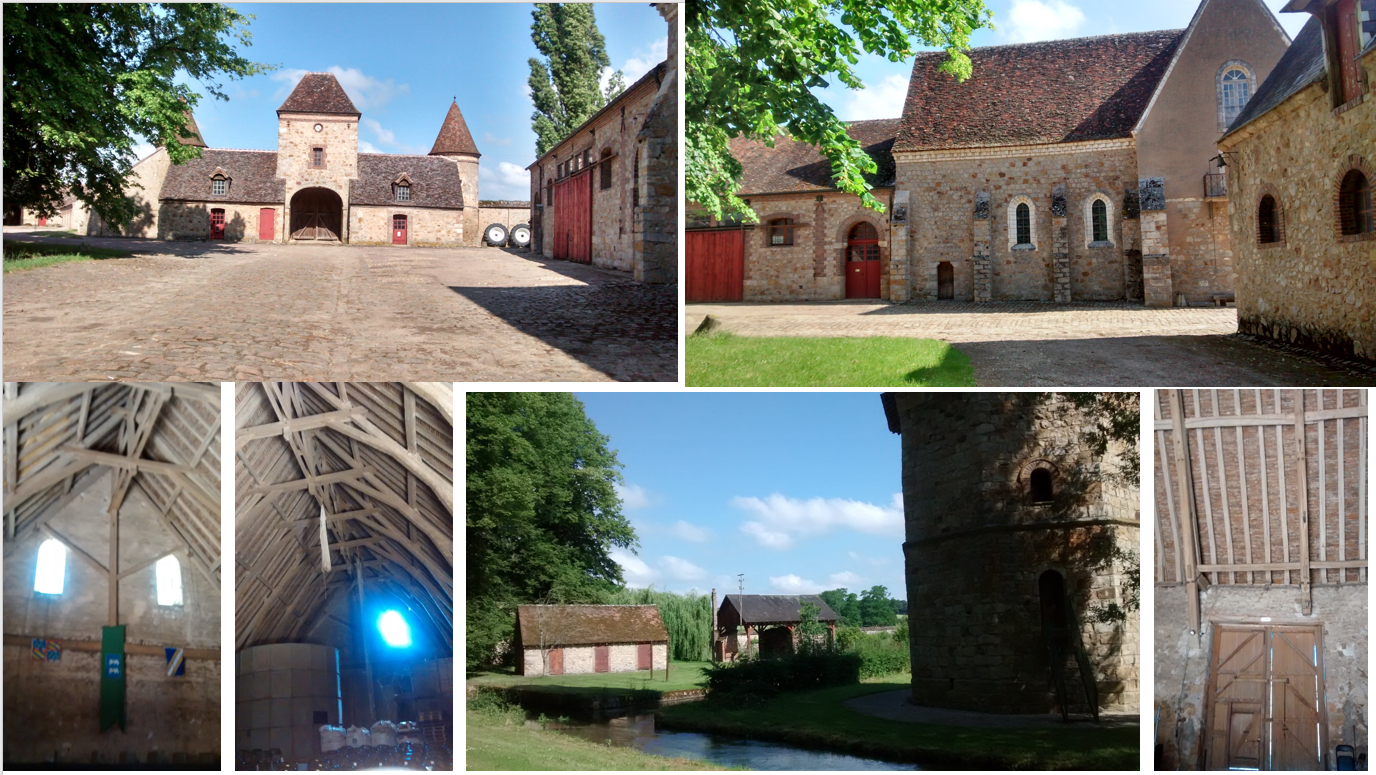 |
| Vauluisant |
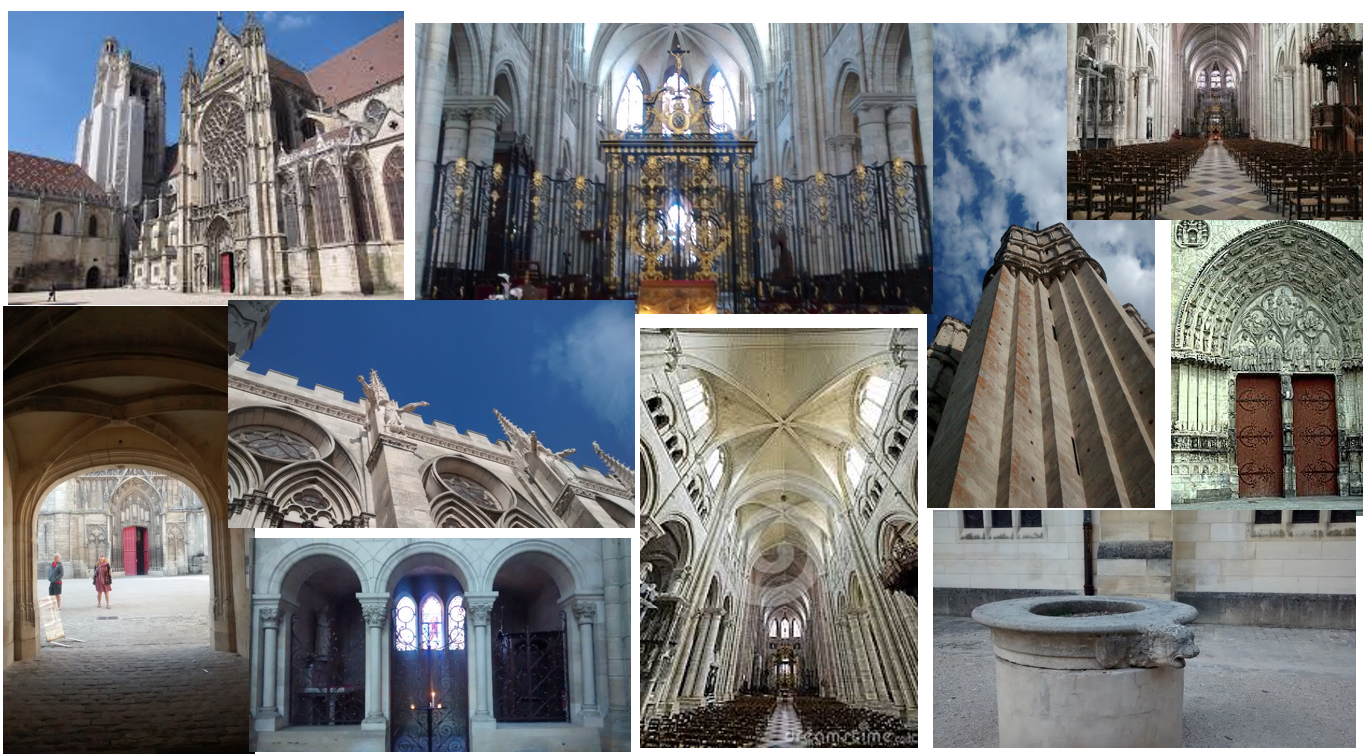 |
| Sens Cathedral |
Most vitally, I garnered a real sense for the size of the country: how far everything is apart, and how long it must have taken to travel from one place to the other in the 12th century. It was much more vast than I’d imagined from reading maps and in the course of our five and a half months we travelled over 14,000 kms!
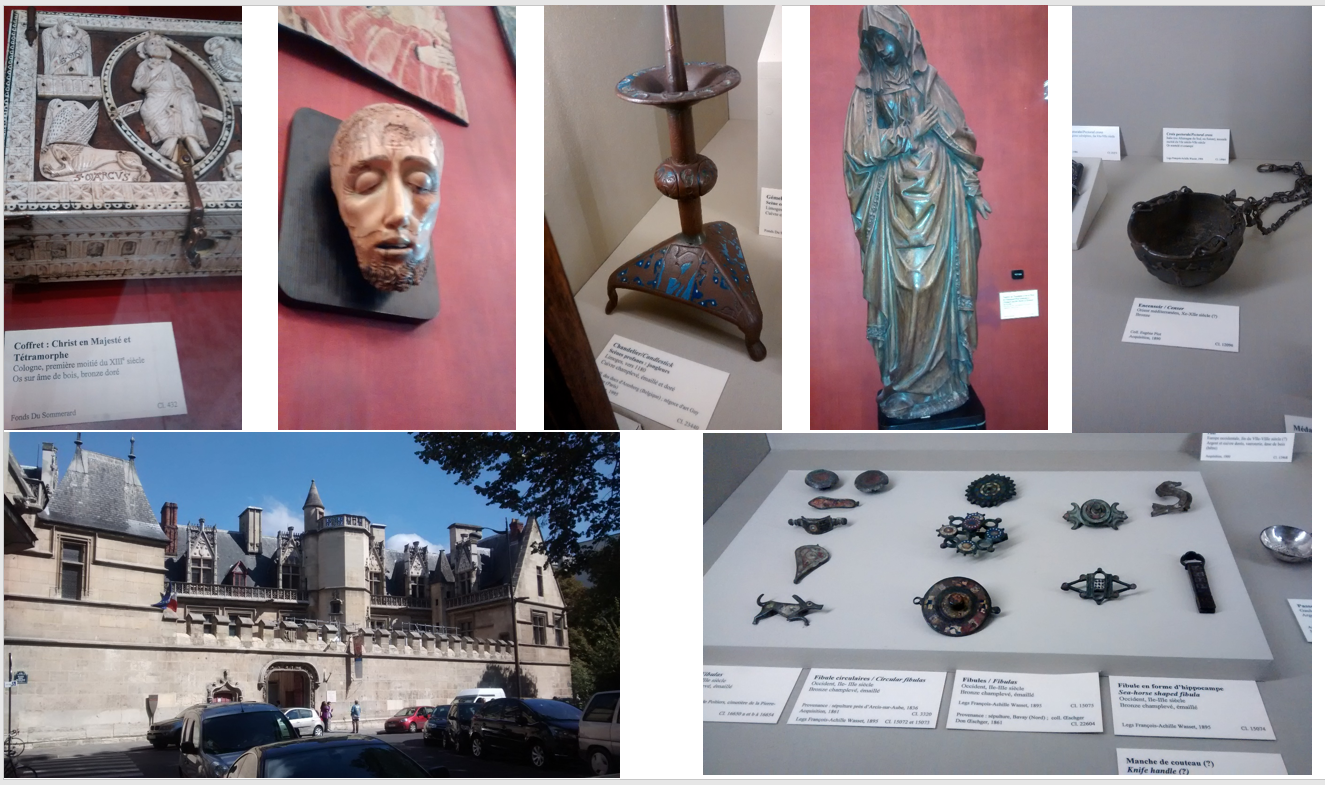 |
| Musee Cluny, Paris |
While in France, as well as lapping up this huge wealth of sensory and built information, I also had to battle questions about my legitimacy for the telling this story. It has been known in Europe since the 15th C and many people I met had studied the letters at school or university. I received comments (with barely concealed eye-rolling) such as ‘why do we need another book on them?’ and puzzlement as to why someone like me would think I could attempt it. It was extremely challenging and I had to do a lot of soul searching. However, I believe the very fact I haven’t come from that tradition gives me the opportunity to view the material with a fresh outsider’s eye (a handy thing for a novelist) – and, also, more to the point, I don’t have a choice! This story has haunted me for so long I felt compelled to write it – and I believe that what I give it is an intelligent eye, an understanding of what makes a story work through the writing of nine novels (including several award winners), and my own emotional intelligence. I hadto believe I could bring something new to it – and if I failed, at least I’d tried.
One of the other two great mysteries is the question of her heritage. There is no information of substance, though a lot of speculation (other writers and scholars have talked her heritage up, linking her to nobility), but I think some of this is artistic fancy when, really, there is no convincing proof at all – and, given Abélard’s propensity for name-dropping (as did others whose early writing I studied), it seems inconceivable to me that he would not have name-checked her family if this would have aided his case. Therefore, here too, I have come up with a fictional explanation for why we will never know this, which also helps explain her relationship with her uncle and his total unhinging at the discovery of her pregnancy and affair, which is fact.
I also had to consider the points of difference I could bring to a fictional account not previously touched upon in detail by any other author, and I believe no one has yet written (in a fictional way, at least) about several new ‘takes’ on Abelard’s actions, for instance, his so-called ‘rescue’ of her when she is found pregnant, which is traditionally depicted as very heroic on Abélard’s part, to get her away from her evil uncle, yet now looks increasingly like an act of hostage-taking in order for Abélard to protect his own life.
With Abélard and Heloise expert Constant Mews’ warning in my ear not to put a 21stC feminist perspective on the story (which I admit is very hard!) I’ve had to search my soul to figure out why she loved him so, given how he so disastrously affected her life. I think it comes down to four things: firstly, she lacked parental love, and in Abélard she saw a father figure; secondly, (and related to the first, in that she had no real grounding in what love was) she hadspent an enormous amount of time immersed in writers such as Ovid at a very impressionable age, and had totally romanticised love – and I think this played very much against her in later life. As well, despite a terrible start to their physical relationship, it does appear that she really did grow to love the physical expression of their relationship and was fully engaged as a sensual, sexual woman (something I think is important to show.) She wasn’t ashamed of sex; she saw it as an extension of their special relationship and relished it. Lastly, Abélard clearly had many faults but he always respected her prodigious intelligence and encouraged her to use it to the maximum, which I think in the end was the deciding factor in her love for him. She was an extraordinarily brilliant woman and to have someone at that time, when women were so downtrodden, who championed her intellect must have been a great gift.
In fact, there is some academic analysis now which seems to take the view that she actually wrote, or certainly guided, at lot of Abélard’s later thinking. I use this, and think there is clear evidence that once Abélard made it plain he would break all contact if she continued to re-litigate their disastrous affair in their later lives, she made a conscious decision that she would rather have the intellectual stimulation of a correspondence relationship with him than a physical one – and from that point on, she guided him most cleverly, eventually educating him in how to be a decent and loving human being. His later writings reveal this new softness, and two particular pieces he wrote towards the end of his life can be read as his apology to her and to their son for his desertion of them and lack of love. This, I think is vital to show, and takes the story on much further than is commonly told. I also wanted to talk about her prowess as a business woman, turning the Paraclete into an extensive estate, with several other sister houses and a reputation for teaching and ethical practice.
The other big question I’ve had to ponder is around religion and her sacrifice by entering (and staying in) the church. Many think that her final letters show that she finally reconciled herself to life as a nun, gave herself over to God and fully entered into the religious experience. I don’t believe this is true. Like all 12th C Christians she had an unquestioning belief in the existence of God and heaven – but, interestingly, after being a Benedictine nun for most of her life, in her later years she swerved more towards a Cistercian outlook, which focussed primarily on the Gospels, embracing simplicity (at odds with the wealth accumulation of the Church as corporation) and Christ’s emphasis on acts of love. I think her faith, in the end, was not about the power of God so much as the power of Love – a theme she revisited time and time again in her writing.
One last point of difference, I hope, is my integration into the story of the political and social changes of the time. At the beginning of the 12thC in France women still had some currency and status within society (in a very medieval kind of way.) But during Héloïse’s lifetime this was purposefully and sometimes cruelly stripped away. Women lost any kind of voice, and it would not really rise again for another 300 years.
It was also a time of great upheaval, as the State (in the form of the King and his officials) and the Church worked together to consolidate their wealth, power and positions by systematically attacking the nobility, the landed gentry and their appointed provosts, in order to break their provincial powers and to suck the wealth back into a consolidated state purse (i.e. a form of state/corporate takeover.) Along the way, the Church used this to evict women out of convents and hand their properties and assets over to men so the wealth was entirely then controlled by male power. The Crusades, too, had huge impact at this time – in fact, what was happening in 12th C France is not too far removed from the same kinds of strains and pressure-points going on today between warring sects. I explore this as fully as I can within the context of the book.
Where-ever I had noted a potential scene, I wrote it onto notepaper and when I had gone through every note book and had a huge pile of scenes beside me, I began to juggle them around, putting them into chronological order and then pasting them onto sheets to use as my scene plan.
Also to be woven in were the themes that arose, and this is really about the writer’s personal ‘take’ on the story. As well as the obvious ones, related to history and the real biographical details, I wanted to talk about the IQ/EQ divide, about the power of words and story, and about how one finds personal peace and acceptance against the odds.
Now the book is at the printers and time is rushing towards the launch, it is amazing to look back over this journey. I am incredibly grateful for all the help I have received from so many quarters and hope that the book finds readers who will enjoy it. And if you’re in Wellington on the 15th May, do come along to the launch!












 Mandy Hager
I hope there is an Ebola version so those of us living abroad can enjoy this. Such a talented family but such a talent in your own right.
LikeLike
I mean ebook! Funny autocorrect
LikeLike
I’ll talk to the publisher about an Ebola version! Yes, there will be an ebook version. Thanks so much for your kind words.
LikeLike
I have just read this with absolute fascination and awe.
Can’t wait to read the book.
The literary world is blessed to have you in it Mandy.
Well done on such an epic project.
LikeLike
Thank you for such a lovely comment. As the launch approaches I’ll hold onto this to stem my nerves!
LikeLike
Absolutely loved Heloise !!
LikeLike
Thanks so much for letting me know!
LikeLike
’Heloise’ should have been considered for the Booker Prize and equivalent prizes. Mandy, your research and writing style recreating time and place for the people you have come to know so well, reminds me of Hilary Mantel’s body of work with ‘Wolf Hall’ and ‘Bring Out the Bodies’ especially. I would love to hear you speak about your work someday soon.
‘Smashed’ was a hit with all my students for different reasons.
2024
LikeLike
What a lovely comment – thanks so much for taking the time to contact me. It’s comments like this that keep me going.
LikeLike